TL;DR
Local digital advertising helps regional brands improve campaign performance by reaching audiences within a specific market through relevant messaging, trusted local media, and first-party audience insights. Unlike broad paid media campaigns, it prioritizes local relevance, helping brands build awareness and stronger business outcomes.
In a crowded digital landscape, local relevance can be a stronger differentiator than scale alone
A lot of regional brands are running campaigns that look great on paper.
The targeting is dialed in. The creative checks every box. The reporting dashboard shows impressions, clicks, and reach climbing month after month.
Yet the results often feel underwhelming.
The problem usually isn't the campaign itself. It's the assumption that broad reach automatically creates meaningful engagement.
For regional brands, the strongest advertising strategies often have less to do with reaching the largest possible audience and more to do with reaching the right audience in the right environment. Local context matters. Familiarity matters. Trust matters.
That's one reason local digital advertising continues to deliver strong results for brands looking to build awareness and drive action within a specific market. Consumers pay attention differently when content feels connected to where they live. A restaurant opening across town, a local business success story, a community event, or a trusted source covering issues that affect daily life all carry a level of relevance that national messaging often struggles to replicate.
Digital advertising has made it easier than ever to reach people—and the challenge now is creating connections that feel meaningful enough to earn attention.
For regional brands, that's where a local approach often pulls ahead.
The problem with generic paid media
Digital advertising platforms have become incredibly sophisticated.
Marketers can target users based on interests, behaviors, purchase intent, demographics, and browsing activity. On the surface, that level of precision should make it easier to reach the right people. Yet many regional brands still find themselves competing for attention in crowded environments where every advertiser has access to similar targeting tools.
The result? Campaigns often look nearly identical.
A local healthcare provider, restaurant group, financial services firm, and home services company may all be bidding for the same audiences across the same platforms. While those campaigns may generate visibility, visibility alone doesn't guarantee connection.
That's where generic paid media can fall short.
Generic paid media is built for scale. It prioritizes broad reach across large audiences. Local digital advertising takes a different approach. It focuses on relevance within a specific market, helping brands show up in places where consumers are already engaged with local content, local conversations, and local communities.
For regional brands, that distinction can have a meaningful impact on performance.
Why local digital advertising creates stronger audience engagement
People don't make decisions based solely on what they see. They make decisions based on what feels relevant to them. A national campaign may reach thousands of consumers in Atlanta one minute, but local digital advertising gives brands an opportunity to connect with those consumers through content and environments that feel familiar.
Think about how people engage with local information.
They follow local news. They look for recommendations from nearby businesses. They pay attention to community events. They care about what's happening in their city because it affects their daily lives.
Advertising that appears alongside those experiences often feels more relevant than advertising delivered in a completely unrelated environment.
That relevance helps capture attention.
Research consistently shows that consumers are more likely to engage with advertising when it appears in trusted, contextually relevant environments. It's one reason local publishers continue to play an important role in modern media strategies.
For marketers, the takeaway is that reaching the right audience may matter, but where you can reach them is equally important.
Local context helps brands stand out
Digital advertising has never been more competitive.
Consumers encounter thousands of marketing messages every day. Most are ignored within seconds.
The brands that break through are often the ones that understand their audience at a local level.
A regional retailer promoting a seasonal campaign in Atlanta can speak directly to local interests, events, and consumer behaviors. A financial services company can address concerns that are specific to the market it serves. A healthcare organization can focus on issues that matter to local families.
Those messages feel more personal because they're rooted in a shared experience. That's difficult to achieve with a broad, one-size-fits-all approach.
Local context doesn't require creating entirely different campaigns for every market. It means understanding the audience well enough to make advertising feel relevant to their reality.
When brands accomplish that, engagement often follows.
The role of first-party data in local digital advertising
The advertising industry is in the middle of a major change.
As privacy expectations evolve and third-party cookies continue to disappear, marketers are placing greater value on first-party data.
First-party data provides insights based on direct audience relationships. That makes it more reliable, more privacy-conscious, and often more useful than third-party alternatives.
For regional brands, local media organizations can offer a significant advantage in this area.
Publishers with strong audience relationships understand how consumers engage with content, which topics drive interest, and where audience attention is concentrated. Those insights help advertisers make smarter decisions about targeting, messaging, and campaign strategy.
Consider the value of reaching an audience that actively engages with local news, community updates, business coverage, dining recommendations, or sports content.
That's a very different opportunity than targeting a broad interest category with limited local context. The strongest local digital advertising strategies combine audience intelligence with meaningful market knowledge. Together, they create campaigns that feel relevant without sacrificing scale.

Strong campaigns reach consumers across multiple touchpoints
One challenge facing marketers today is fragmentation.
Consumers move between websites, mobile devices, newsletters, podcasts, social platforms, streaming content, and live experiences throughout the day.
A single ad placement rarely influences a purchasing decision on its own.
That's why successful local digital advertising strategies often extend further than display advertising.
Brands that connect with audiences across multiple channels create more opportunities for engagement and recall.
A consumer might:
- See a display ad while reading local news
- Open a sponsored newsletter later that morning
- Hear a podcast sponsorship during their commute
- Attend a community event where the brand has a presence
None of those interactions exist in isolation, but together, they build familiarity.
For regional brands, this approach can be particularly effective because it mirrors how people naturally consume local information and engage with their communities.
The goal isn't simply to increase exposure here, it's to create consistent touchpoints that reinforce the brand over time.
Better relevance often leads to better business outcomes
Marketing teams are under increasing pressure to prove results.
Clicks and impressions remain important indicators, but most brands ultimately care about outcomes such as:
- Brand awareness
- Lead generation
- Customer acquisition
- Sales growth
- Long-term loyalty
Local digital advertising supports those goals by reducing wasted reach and improving audience relevance. When campaigns focus on consumers who are genuinely connected to a market, advertising dollars often work harder.
Brands can spend less time chasing volume and more time building meaningful relationships with potential customers.
This is especially important for businesses operating within a defined geographic area.
A local home services company doesn't need national reach. A regional healthcare provider doesn't need impressions from consumers hundreds of miles away. A local retailer benefits most from reaching people who can realistically become customers.
The closer advertising aligns with business objectives, the easier it becomes to measure meaningful success.
What to look for in a local advertising partner
Not all digital advertising opportunities are created equal.
When evaluating a local advertising partner, marketers should look beyond audience size alone.
A larger audience may look impressive on a media kit, but scale is only one piece of the equation.
Questions worth asking include:
- Does the partner have a strong connection to the local community?
- Do they offer meaningful first-party audience insights?
- Can they support campaigns across multiple channels?
- Do they provide access to trusted content environments?
- Can they help measure performance against business goals?
The answers to those questions often reveal more about potential campaign success than audience size alone. The best partnerships help brands understand their audience, strengthen their message, and create connections that support long-term growth.
Local relevance is a competitive advantage
Regional brands don't have the same challenges as national advertisers, and they shouldn't approach advertising the same way. Success isn't solely about reaching the largest possible audience. It's about reaching the right audience in places where trust, relevance, and attention already exist.
Local digital advertising gives brands an opportunity to connect with consumers through the content they engage with, the communities they care about, and the channels they use every day. That combination creates a foundation for stronger engagement, better performance, and more meaningful business results.
As competition for attention continues to increase, local relevance is becoming one of the most valuable assets a brand can have.
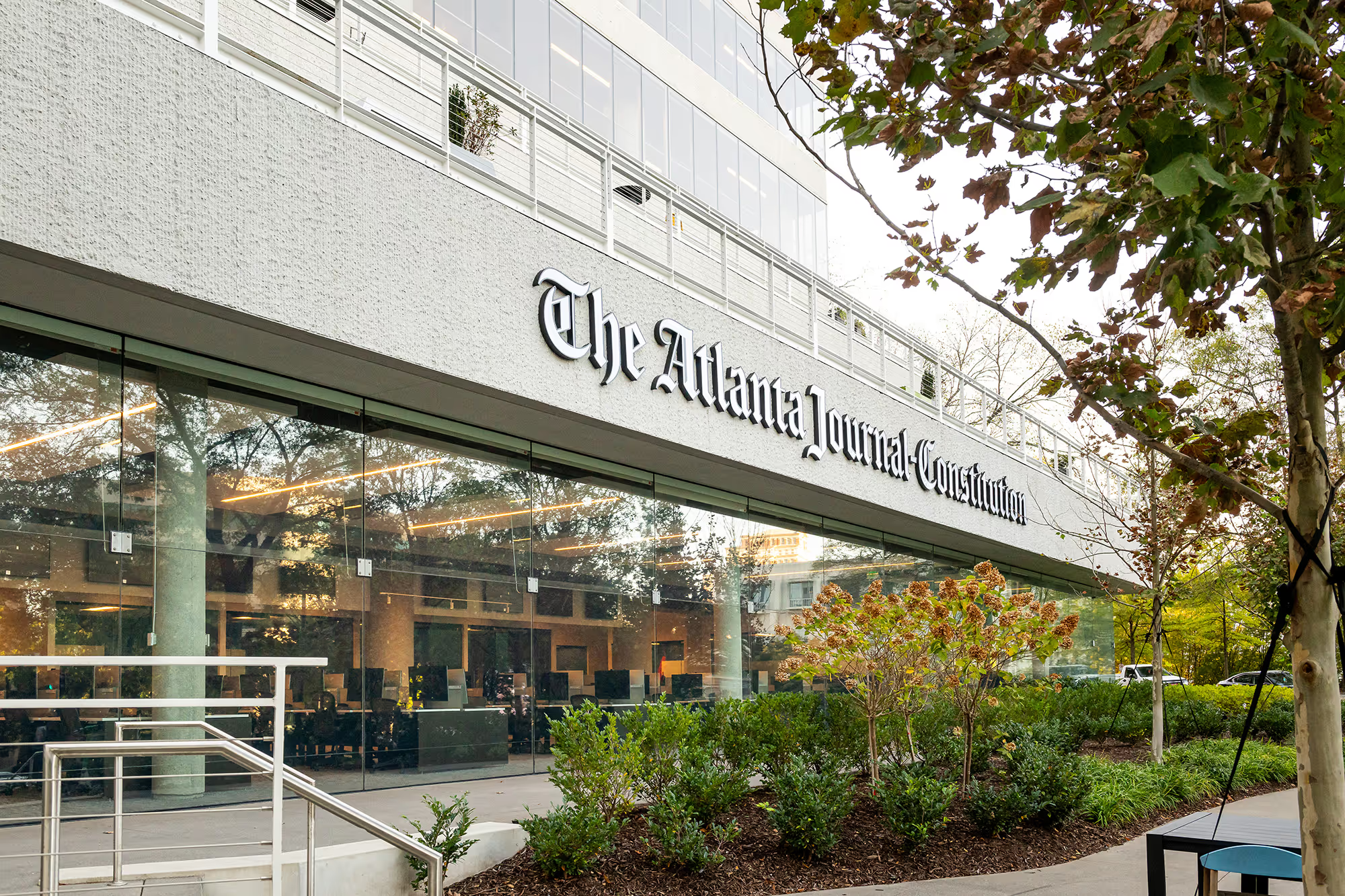
Looking for a smarter way to reach Atlanta audiences?
AJC Ads combines trusted local journalism, first-party audience insights, and multi-channel advertising solutions that help brands connect with consumers across digital, newsletters, audio, events, and branded content.
Get in touch with our team to explore how a locally focused advertising strategy can help you achieve your marketing goals.
FAQs
What is local digital advertising?
Local digital advertising is a marketing strategy that targets consumers within a specific geographic area using channels such as display advertising, search, social media, newsletters, podcasts, and local publisher websites. It helps businesses reach audiences who are most likely to become customers.
Why is local digital advertising more effective than broad paid media?
Local digital advertising focuses on relevance rather than reach alone. By targeting consumers within a defined market and placing ads in trusted local environments, brands can improve engagement, reduce wasted ad spend, and build stronger connections with potential customers.
What are localized digital advertising campaigns?
Localized digital advertising campaigns tailor messaging, creative, and targeting to a specific city, region, or community. This approach makes advertising feel more relevant by reflecting local interests, events, and consumer needs instead of using the same message for every market.
What digital advertising services should regional brands look for?
Regional brands should look for digital advertising services that combine audience targeting, first-party data, premium local media placements, campaign reporting, and multi-channel distribution. Working with a partner that understands the local market can help improve campaign performance and reach the right audience more effectively.